Create your audiobook with AI voices
Fliki's Script-to-Audio workflow turns your manuscript into a natural-sounding audiobook using lifelike AI voices. Paste a chapter, pick a narrator, and generate. Everything happens on a single-page builder, and you can fine-tune every line afterward before you download.
Step 1 - Open the Script to audio workflow
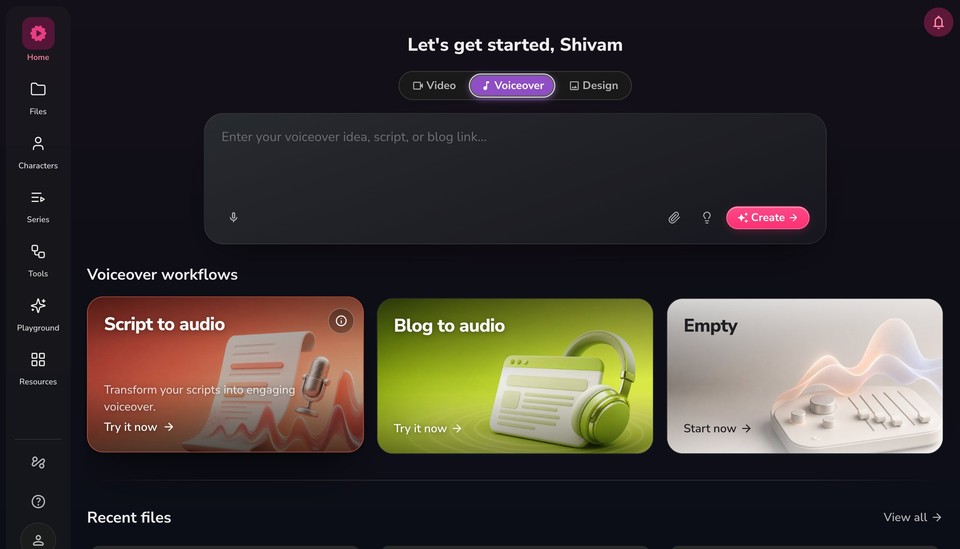
Open the Fliki homepage at app.fliki.ai.
Switch the top toggle to Voiceover.
Under Voiceover workflows, click Script to audio. You can also paste your chapter straight into the "Enter your voiceover idea, script, or blog link" box.
Pro tip: Use a folder as your book and the files inside it as chapters. Open Files, create or open your book's folder, then start a new Script to audio file inside it for each chapter.
Step 2 - Add your chapter content
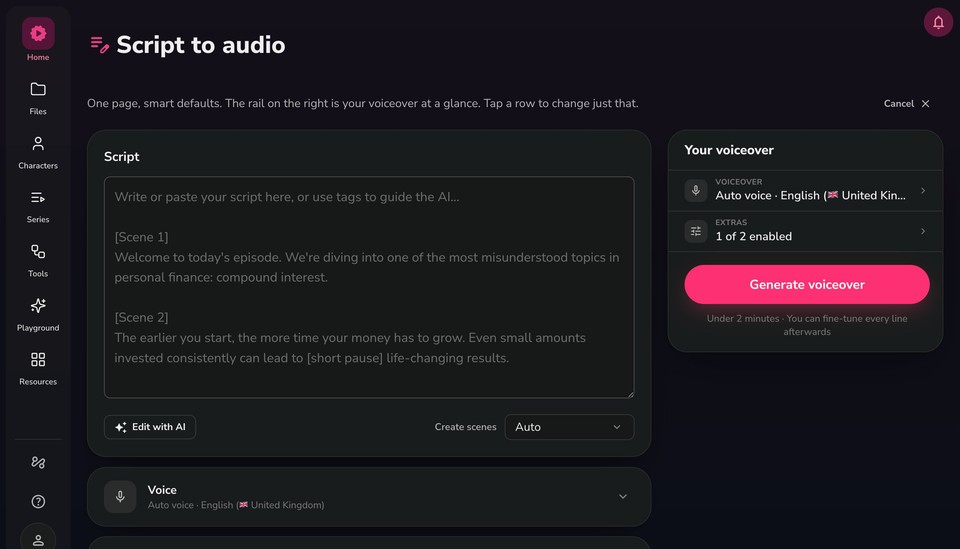
The builder is a single page. Your text sits on the left, and the rail on the right ("Your voiceover") summarizes your narrator voice and extras. Tap any row to change just that part.
Write, paste, or import your chapter into the Script box. Fliki formats it based on the line breaks in your pasted text.
Use inline tags like [short pause] to control pacing, and [Scene 1], [Scene 2] tags to split long chapters into sections.
Use Edit with AI if you want to adjust phrasing or tone.
Leave Create scenes on Auto to let Fliki split the text into scenes.
Step 3 - Select a narrator voice
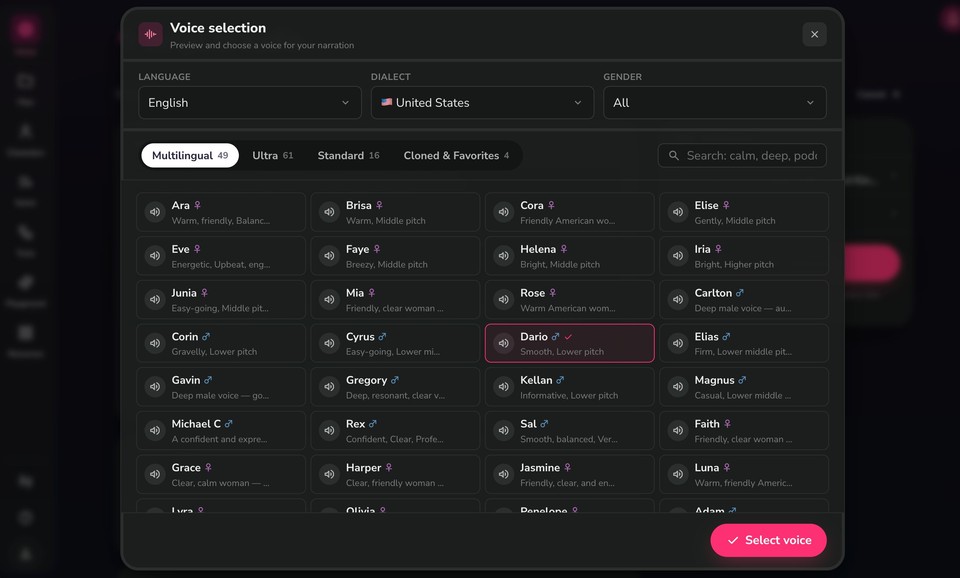
Open the Voice panel (or the Voiceover row in the rail), then click Browse voices:
Filter by Language, Dialect, and Gender.
Switch between voice sets: Multilingual, Ultra, Standard, and Cloned & Favorites. Fliki offers a large library of voices across 80+ languages and 100+ dialects.
Search by descriptor (for example, "calm," "warm," "narration").
Click the speaker icon to preview a voice, then click Select voice.
Tip: You can clone your own voice to narrate the book yourself, and use it from the Cloned & Favorites tab.
Step 4 - Set extras
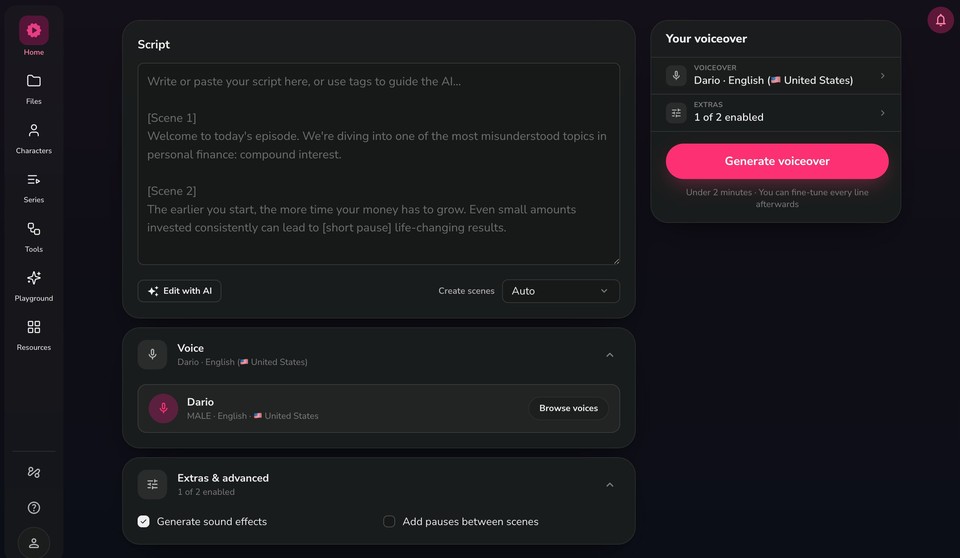
Open Extras & advanced for optional touches such as Add pauses between scenes to give chapters a natural rhythm. For most audiobooks you can leave sound effects off.
Step 5 - Generate your audiobook chapter
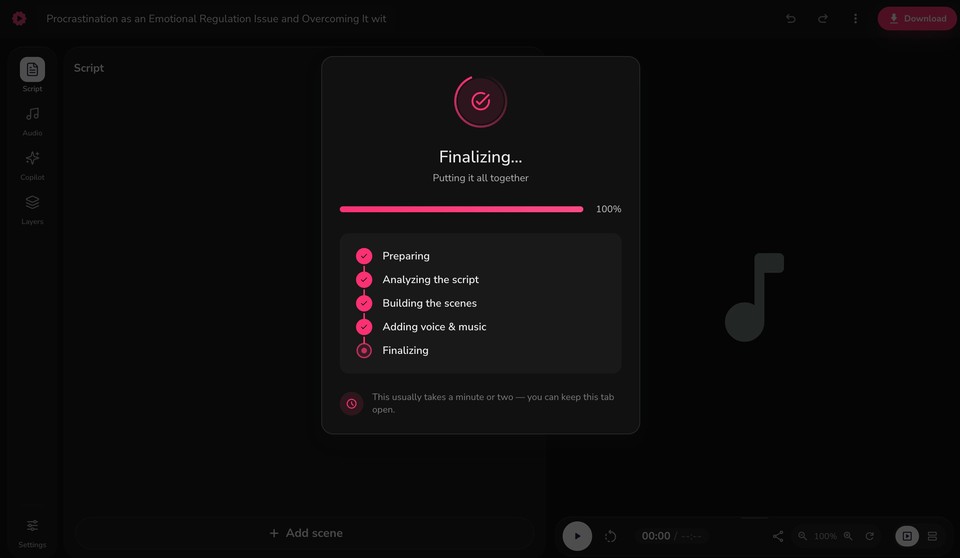
Click Generate voiceover. It usually takes under 2 minutes, and you can fine-tune every line afterward. Fliki works through Preparing, Analyzing the script, Building the scenes, Adding voice & music, and Finalizing.
Step 6 - Edit and add background music
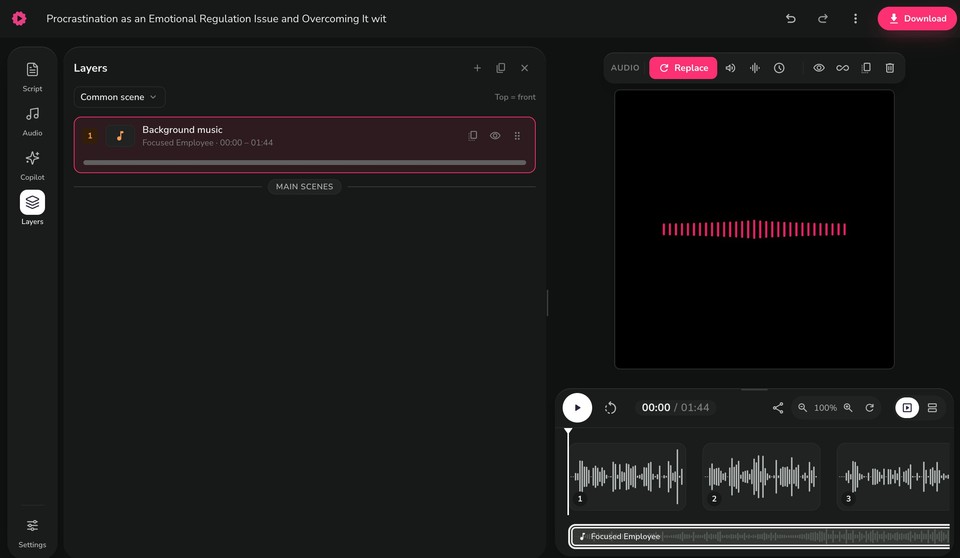
When generation completes, your chapter opens in the editor:
The bottom player lets you play back the full chapter and scrub the timeline.
If you want ambient music, open the Layers panel and manage the Background music layer under the common scene. Use Replace to swap the track and adjust its volume.
Fine-tune wording and pacing from the Script, Audio, and Copilot tabs.
Step 7 - Preview and download
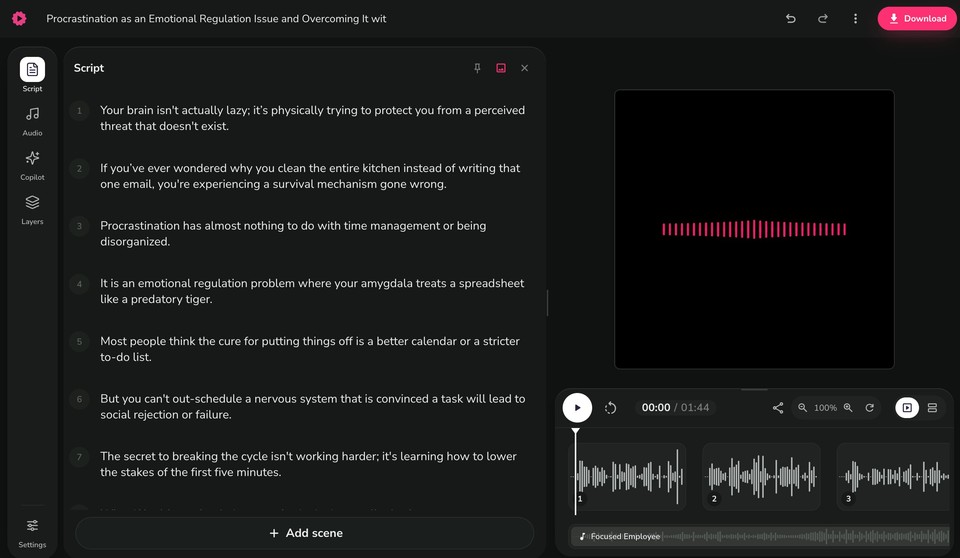
Play back the chapter to check the narration.
Click Download, choose mp3 (or wav), then Start export to save your audiobook chapter. Repeat for each chapter in your book's folder.
With Fliki's Script-to-Audio workflow, turning a manuscript into a professional audiobook has never been easier.
FAQs
Yes, it is legal to make an audiobook as long as you have the necessary rights to create an audio version of the content. This typically involves obtaining permission from the copyright holder, whether it's the author or a publishing company.
Yes, audiobooks can generate revenue for authors, narrators, and publishers. Audiobooks are typically sold through various platforms, and royalties are paid based on sales or usage.
To turn your book into an audiobook using Fliki, start by choosing a narrator voice that suits your audiobook and add your book's content to the scene by writing, pasting, or importing it into the script tab of magic create. Customize the audiobook with background music, preview the result, and then download the audiobook chapter in MP3 format.
Making audiobooks can be profitable for authors, narrators, and publishers, depending on factors such as sales volume, royalties, and production costs.