
Introduction
If you have landed here, you are probably not asking "what is an AI avatar?" anymore. You already know. You have made a few HeyGen videos, you liked the avatars, and then one of two things happened. Either your monthly credits vanished faster than you expected and your "unlimited" plan turned out to have a very real ceiling, or a render got stuck at 97 percent the night before a deadline and you started quietly searching for a backup.
That is the honest reason most people look for HeyGen alternatives. It is rarely that HeyGen is bad. It is that the pricing model, the credit math, or the use case fit stopped matching what you actually need. So this guide does not pretend every tool is wonderful. We dug through current pricing pages, the top-ranking comparison articles, and a stack of recent user reviews on G2, Trustpilot, Capterra, and Reddit to map out which HeyGen alternative genuinely fits which job, and roughly what you will pay once the headline number stops telling the whole story.
We have included Fliki, our own AI video and voiceover platform, in this list. We have tried to be fair about where it wins and where another tool is the smarter pick, because a comparison you cannot trust is worthless to you and to us.
Let us start with the part almost every other "best HeyGen alternatives" article skips.
Why people actually leave HeyGen in 2026
HeyGen is a strong product. The avatars are expressive, the lip sync is good, and the language support is broad. The friction is almost never the technology. It is the economics and the reliability. Three complaints come up again and again across review sites and community threads.
1. The credit math is confusing, and "unlimited" is not unlimited
HeyGen's Creator plan ($29 per month) advertises unlimited video creation, but the premium features people actually want, like Avatar IV and lip-sync translation, run on a separate pool of premium credits. Based on HeyGen's own Avatar IV documentation, one minute of Avatar IV video consumes roughly 20 credits, so the credits bundled with Creator cover only about 10 minutes of premium avatar video per month. Worse, every re-render after an edit charges you again, which makes iteration expensive. As one Arcade pricing breakdown put it after doing the math, overage packs work out to roughly $5 per extra minute of Avatar IV on top of your subscription. Plenty of creators report bills climbing past $100 once they exhaust credits mid-month.
2. Reliability wobbles on longer projects
A widely shared r/generativeAI thread titled "HeyGen Studio has become unusable" describes renders frozen at 97 percent for 30 to 60 minutes on multi-scene videos. For anyone shipping ten or more videos a month, that becomes a production bottleneck rather than a one-off annoyance.
3. Pricing keeps changing, and support can be slow
HeyGen has reshuffled its plans and credit allocations more than once, which is why you will find conflicting credit numbers across the web. Recent verified reviews on Trustpilot and Capterra also flag slow, templated support responses and processing times that drift without explanation.
None of this means you should abandon HeyGen. It means you should match your real production pattern, your volume, your revision habits, and your budget, against the tool, instead of buying on the sticker price. That is exactly what the rest of this guide helps you do.
The one-line takeaway: HeyGen is built for solo creators and small teams making a handful of short, polished avatar videos per month. If your needs are higher volume, more budget-sensitive, more creator-style, or more developer-focused, one of the alternatives below will almost certainly serve you better.
How we evaluated these HeyGen alternatives
To keep this useful rather than promotional, we judged every tool on the criteria that actually decide whether you keep using a platform after week two:
-
Avatar realism and lip sync, since a stiff or misaligned avatar undermines everything else.
-
Voice quality and language coverage, because most people leaving HeyGen are doing some kind of localization.
-
Pricing model and true cost, with special attention to whether you pay in clear units (minutes) or murky ones (credits) and how fast costs scale.
-
Reliability and rendering speed, drawn from recent reviews and documented testing.
-
Use case fit, because the "best" tool for a corporate training team is the wrong tool for a TikTok creator.
We cross-referenced live pricing pages (verified for Q1 to Q2 2026), independent test write-ups, and aggregated sentiment from G2, Trustpilot, Capterra, and Reddit. Prices change often in this category, so treat the numbers as a current snapshot and confirm on each vendor's page before you buy.
HeyGen alternatives at a glance
|
Tool |
Best for |
Pricing model |
Entry price (approx.) |
Standout strength |
|---|---|---|---|---|
|
Fliki |
Affordable all-in-one text-to-video, voiceover, and avatars |
Flat, minutes-based |
Free, paid from ~$21/mo (annual) |
2,000+ voices, 80+ languages, blog-to-video |
|
Synthesia |
Enterprise training, L&D, and internal comms |
Minutes per month |
Free, from ~$18/mo (annual) |
Most polished avatars, governance, SCORM |
|
Colossyan |
Corporate training with LMS and SCORM |
Minutes, unlimited on Business |
From ~$19/mo (annual) |
Interactivity, quizzes, LMS export |
|
D-ID |
Photo-to-video talking avatars and API |
Tiered subscription |
From ~$5.99/mo |
Animate a single headshot, strong API |
|
Creatify |
UGC-style performance ads for e-commerce |
Credit-based |
From ~$19/mo |
Ad-native avatars, batch testing, analytics |
|
Captions (Mirage) |
Mobile-first short-form creators |
Credit-based |
From ~$9.99/mo |
Phone-first workflow, expressive avatars |
|
Argil |
AI clones and influencer-style social content |
Flat subscription |
From ~$39/mo |
Realistic personal clone, social scheduling |
|
Vidnoz |
Budget users and the most generous free tier |
Credits, freemium |
Free, paid from ~$14.99/mo |
Free daily generation, 250+ avatars |
|
DeepBrain AI Studios |
Enterprise broadcast-quality avatars |
Tiered subscription |
From ~$24/mo |
Manual gesture control, 2,000+ avatars |
|
Veed |
Teams needing a full editor plus avatars |
Flat subscription |
From ~$18/mo |
Timeline editing, captions, repurposing |
|
Tavus |
Developers building real-time conversational video |
Usage and API |
Custom, typically $375+/mo |
Real-time interactive digital twins |
Now let us get into the detail, organized loosely from the most general-purpose options to the most specialized.
1. Fliki: the best affordable all-in-one alternative
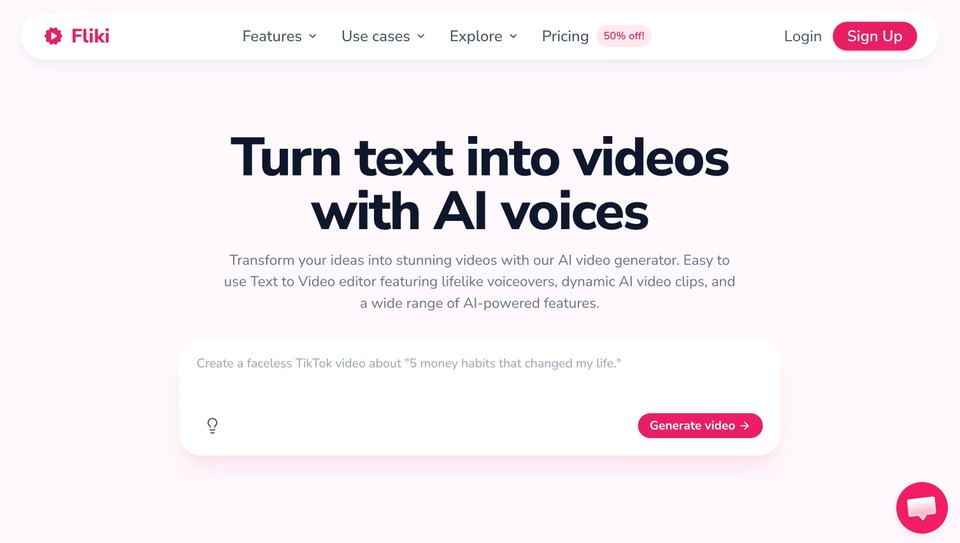
Fliki approaches the problem from a different angle than HeyGen. Instead of being avatar-first, it is content-first. You give it a script, a blog post URL, or even a set of slides, and it builds a complete video with an AI voiceover, matching visuals, subtitles, and music. Avatars are part of the toolkit rather than the entire point, which is exactly what a lot of marketers, educators, and content teams actually need.
Where Fliki stands out is breadth at a sane price. It offers more than 2,000 AI voices across 80-plus languages and 100-plus dialects, plus voice cloning from a short sample. Its AI avatar generator gives you 70-plus public avatars, the option to turn a single photo into a talking presenter, and a custom "digital twin" you can train from a two-minute recording so the same face and voice appear in every video. The text-to-video and blog-to-video workflows are genuinely fast for repurposing long-form content into social clips.
Pricing: A free plan (3 credits per month, watermarked), with paid plans starting around $21 per month on annual billing and scaling up to premium tiers that add HD, voice cloning, and API access. Crucially, Fliki bills in clear minutes, not premium credits, so you always know what a video will cost you. See the full Fliki pricing page for current tiers.
Pros: Excellent value, huge voice and language library, fast content-to-video workflows, transparent minutes-based pricing, commercial usage rights on paid plans.
Cons: Avatar realism is functional and best suited to corporate, educational, and explainer content rather than ultra-cinematic talking-head ads. Power users who want the absolute most expressive avatar on the market may still prefer an avatar-first specialist.
How it compares to HeyGen: Fliki trades a small amount of avatar polish for a far broader content engine and predictable pricing. If your real job is "turn this script or article into a watchable video in five languages without watching credits evaporate," Fliki is the more economical, less stressful pick. If your real job is "produce one stunning cinematic avatar ad," an avatar-first tool may edge ahead.
Best for: Marketers, course creators, agencies, and content teams who want voiceover, video, and avatars in one affordable platform.
2. Synthesia: the best alternative for enterprise training and L&D
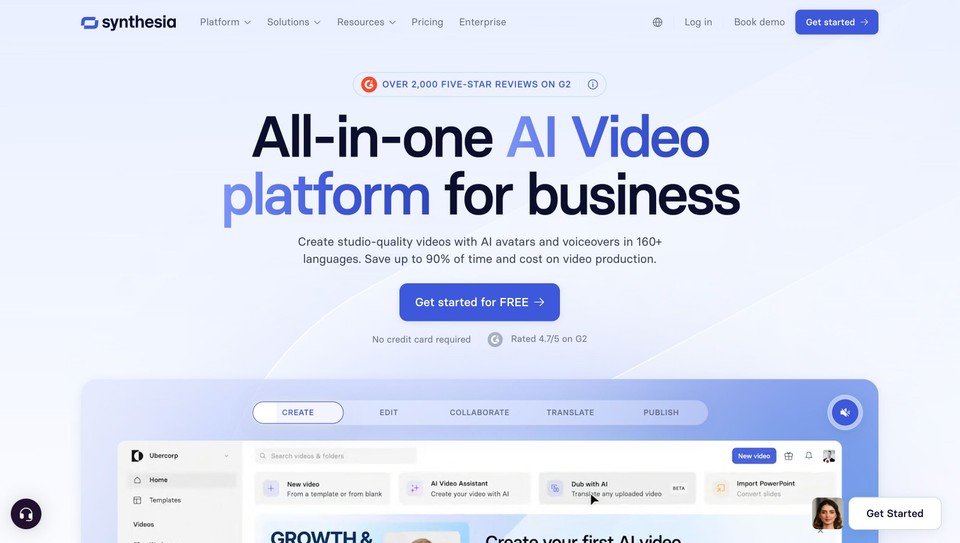
Synthesia is the most direct HeyGen competitor and arguably the category's enterprise leader, used by a reported 90 percent of the Fortune 100. In hands-on tests published by reviewers, its avatars show some of the most natural facial movement, hand gestures, and micro-expressions available, and its voices have convincing intonation across 140-plus languages.
The platform shines for structured, governed content. You get a slide-based editor that feels like PowerPoint, one-click video translation, SCORM export, LMS integration, interactivity like quizzes and branching, and the collaboration and compliance controls big organizations require.
Pricing: Free plan (10 minutes per month, watermarked, 9 avatars), Starter around $29 per month ($18 annual), Creator around $89 per month ($64 annual) for 30 minutes monthly and 5 personal avatars, and custom Enterprise. Synthesia sells minutes per month, which most teams find far easier to budget than credits.
Pros: Top-tier avatar realism, excellent localization, strong enterprise governance, easy-to-budget minute pricing.
Cons: Avatar expressiveness is deliberately controlled and formal, so it is a poor fit for casual UGC ads. Rendering can be slower than rivals, and there is no Safari support.
How it compares to HeyGen: Reviewers generally rate Synthesia's avatar realism and voice intonation a touch above HeyGen's, with stronger enterprise tooling. HeyGen tends to feel more flexible for general marketing and creator content. For training, enablement, and internal comms, Synthesia is the safer choice.
Best for: L&D teams, enterprise communications, and anyone who needs compliance, SCORM, and predictable per-minute costs.
3. Colossyan: the best alternative purpose-built for training teams
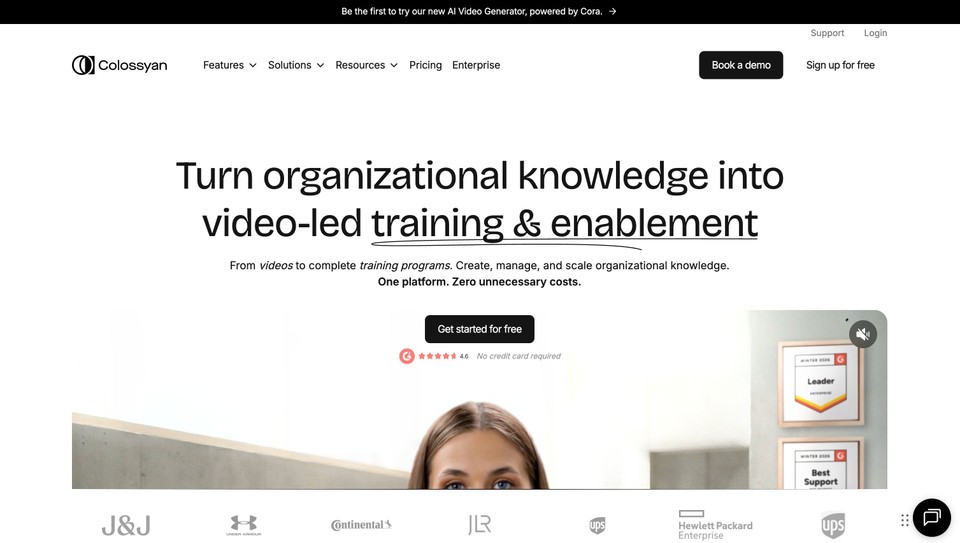
Colossyan competes for the same corporate training audience as Synthesia but leans even harder into learning workflows. It supports interactive quizzes, branching scenarios, completion analytics, LMS integrations, and SCORM export, all inside a clean slide-based editor. Its AI voices are high quality, and even the free plan allows limited 4K exports, which is unusually generous.
Pricing: Starter around $27 per month ($19 annual) for 20 minutes monthly and 70-plus avatars, Business around $88 per month ($70 annual) with unlimited minutes on the standard model and 110-plus avatars, plus custom Enterprise. The unlimited-minutes Business tier is strong value for teams producing a lot of training content.
Pros: Built for L&D, generous Business tier, LMS-ready, solid voices.
Cons: In independent tests, avatar body movement and expressiveness still lag the top tier, and some reviewers hit rendering hiccups and slight quality drops on non-English videos.
How it compares to HeyGen: HeyGen has the more realistic avatars, but Colossyan is better aligned to structured learning thanks to its analytics, LMS, and SCORM features. If you are building courses rather than marketing clips, Colossyan is the more natural home.
Best for: Corporate training and L&D teams that live inside an LMS.
4. D-ID: the best alternative for photo-to-video avatars and APIs
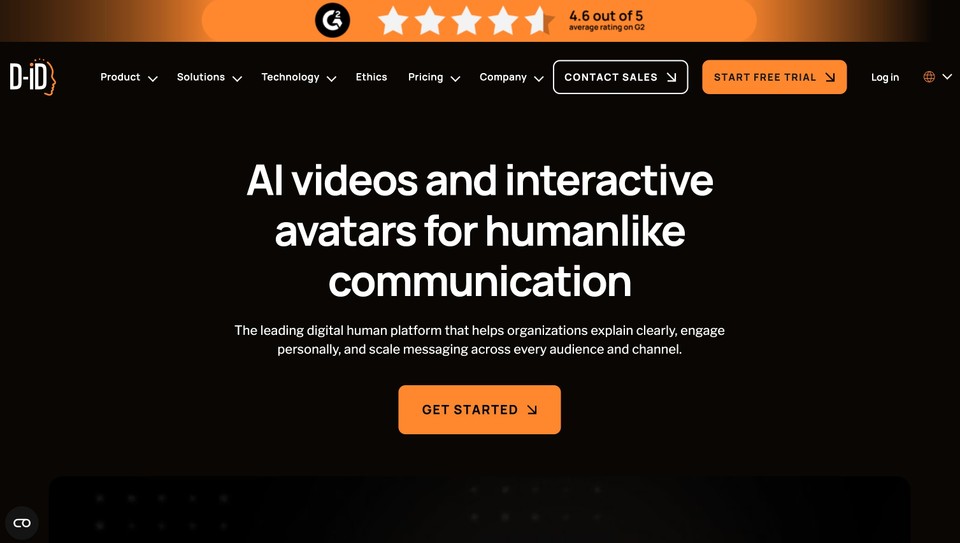
D-ID has a defining trick: upload a single still photo and it animates that face into a talking, lip-synced avatar. That makes it ideal when you want a specific person's likeness, a historical figure, or a brand mascot rather than a stock presenter. It also offers one of the most developer-friendly APIs in the space and the cheapest entry point of any serious tool here.
Pricing: A Lite plan around $5.99 per month makes it the cheapest paid tier in the avatar market, scaling up to an Advanced plan near $196 per month for 100 minutes and heavier API use.
Pros: Animate any headshot, very low entry price, strong API for building avatars into your own product, 100-plus stock avatars.
Cons: Per-minute costs at higher tiers get steep, and photo-based avatars can look less natural than purpose-built studio avatars for long-form delivery.
How it compares to HeyGen: HeyGen produces more polished full-body presenters, but nothing beats D-ID when your core need is "make this exact photo talk" or "embed avatar generation into my app via API."
Best for: Developers, product teams, and anyone animating real photos on a budget.
5. Creatify: the best alternative for UGC-style performance ads
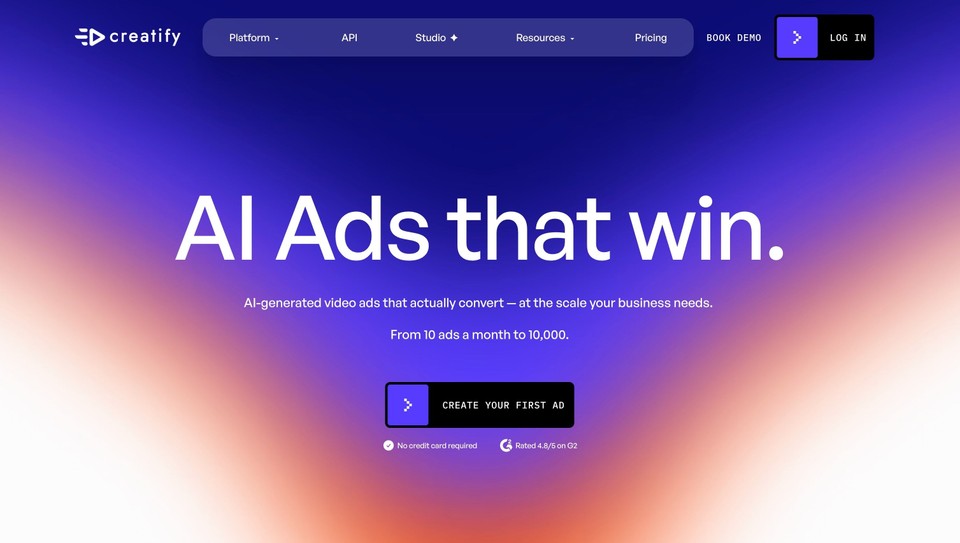
Creatify is built for one job and does it exceptionally well: high-volume, UGC-style video ads for e-commerce and performance marketing. Paste a product URL and it generates scroll-stopping vertical ads with avatars that genuinely look like real creators, complete with emotional presets, full-body expressiveness, batch creation, A/B testing, ad analytics, and direct publishing to Meta and TikTok.
Pricing: Free plan (10 monthly credits, watermarked), Starter around $19 per month for 100 credits and 300-plus AI actors, Pro around $49 per month adding 700-plus avatars, custom avatars, batch mode, and videos up to 10 minutes.
Pros: Best-in-class UGC realism, purpose-built ad tooling, fast multilingual rendering, direct ad-platform publishing.
Cons: It is laser-focused on ads, so all that ad machinery is dead weight for corporate, training, or long-form video. No automatic translation in the way some rivals offer.
How it compares to HeyGen: Reviewers often rate Creatify's avatar realism slightly above HeyGen's for the specific UGC ad style. If you are running paid social at scale, Creatify is the obvious choice; HeyGen is the more general-purpose tool.
Best for: Direct-to-consumer brands, growth marketers, and agencies running paid social ads.
6. Captions (Mirage): the best alternative for mobile-first creators
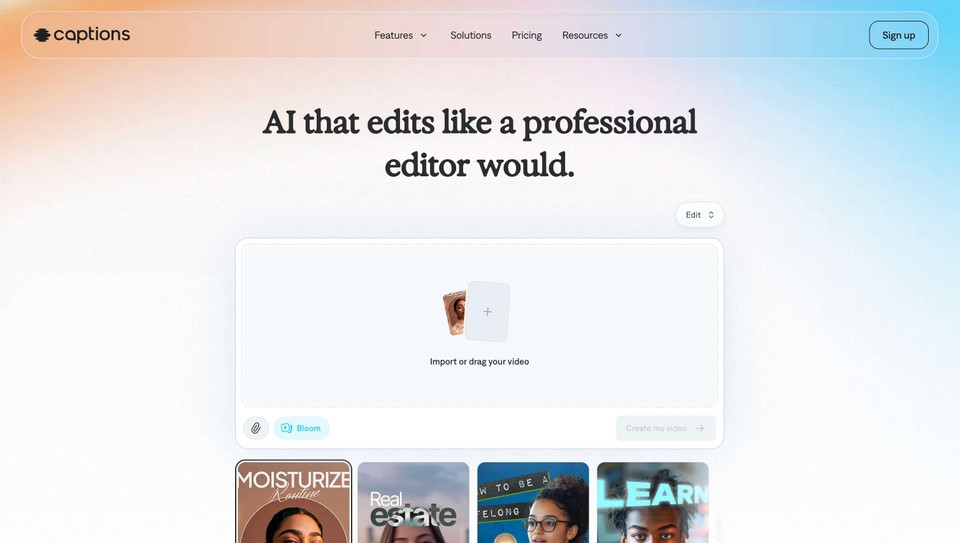
Captions, and its Mirage avatar model, is designed for creators who work primarily from their phones. It blends AI avatars, AI dubbing, auto-captions, and editing into a workflow tuned for short-form social video. The avatars are expressive and the app is friendly to people who are not video editors.
Pricing: A Pro plan around $9.99 per month, with Max around $24.99 and Scale around $69.99, running on a credit system. Heavy AI features like avatars and dubbing spend credits, so a productive month can cost more than you planned.
Pros: Excellent mobile experience, expressive avatars, strong captioning and dubbing, low entry price.
Cons: Credit-based pricing can be as unpredictable as HeyGen's, and the tool is built for short-form rather than long corporate video.
How it compares to HeyGen: Captions is friendlier for solo creators making social content on a phone, while HeyGen is more of a desktop studio. The credit caveat applies to both, so watch your usage.
Best for: Individual creators and social media managers producing short-form video on mobile.
7. Argil: the best alternative for AI clones and influencer content
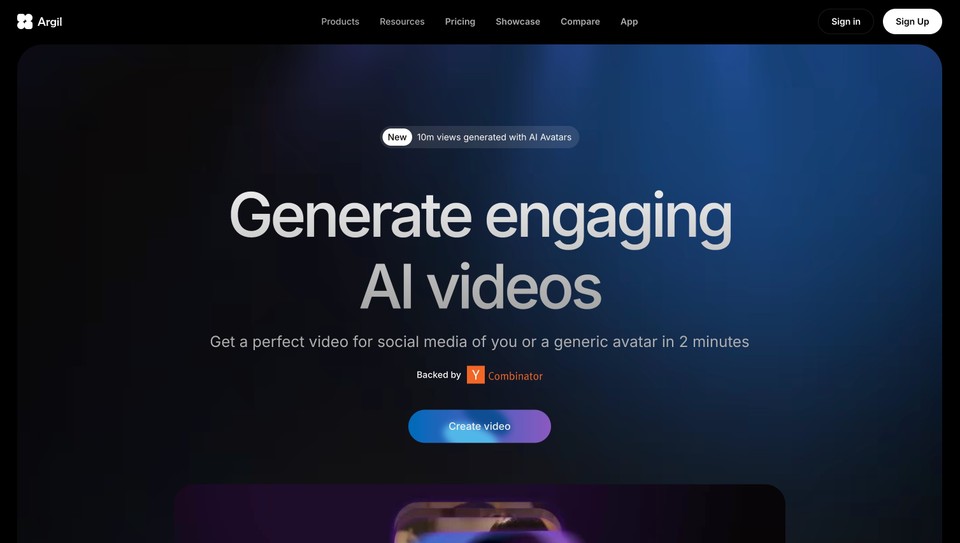
Argil specializes in creating a realistic AI clone of you and turning scripts into influencer-style short videos in minutes, complete with b-roll, captions, and even scheduling to social platforms. It is popular with personal brands and creators who want to scale their own face without filming every day.
Pricing: A Classic plan around $39 per month for one avatar clone and up to 25 minutes of video, and a Pro plan around $149 per month for the AI influencer builder and up to 100 minutes. Flat tiers, no hidden credit metering.
Pros: Natural-looking personal clone, influencer-focused features, transparent flat pricing, social scheduling.
Cons: Pricier per minute than budget tools, and overkill if you only need stock avatars rather than a clone of yourself.
How it compares to HeyGen: HeyGen offers cloning too, but Argil's entire workflow is built around the creator-clone use case, with content formats and scheduling tuned for social. For personal-brand video at scale, Argil feels more native.
Best for: Personal brands, founders, and influencers scaling their own likeness on social.
8. Vidnoz: the best free and budget alternative
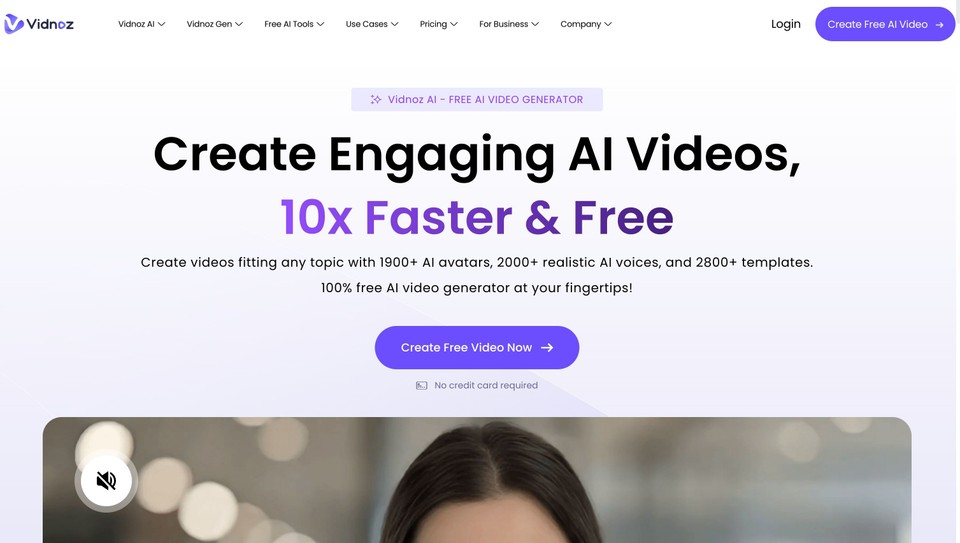
If your first priority is "spend as little as possible," Vidnoz is hard to beat. Its free plan offers daily AI video generation, 250-plus avatars, 170-plus voices, and 300-plus templates, which is unusually generous for a free tier. Paid plans stay cheap.
Pricing: Free plan (a few minutes per day, watermarked, 720p), Starter around $14.99 per month for 15 minutes monthly with no watermark, scaling up modestly from there.
Pros: Genuinely useful free tier, low paid prices, big avatar and template libraries.
Cons: Avatar realism and rendering quality are a step below the premium tier, and free output is watermarked and capped.
How it compares to HeyGen: HeyGen produces noticeably more polished avatars, but Vidnoz lets you produce real videos at little or no cost, which is exactly what budget-conscious users and students want.
Best for: Beginners, students, and anyone who needs free or very cheap avatar video.
9. DeepBrain AI Studios: the best alternative for broadcast-style enterprise video
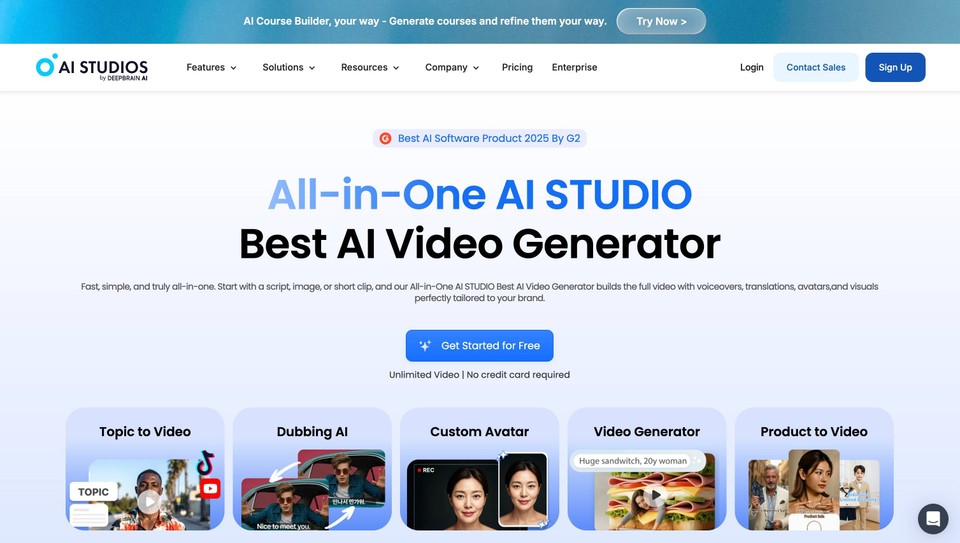
AI Studios by DeepBrain AI targets enterprises that want broadcast-quality avatars and a deep toolkit. It offers 2,000-plus avatars, multi-avatar scenes, a unique manual gesture-scripting feature for fine control over avatar behavior, AI dubbing, access to models like Sora and Veo, and even deepfake detection.
Pricing: Free plan (3 videos per month, 17 avatars, 720p), Personal/Starter around $24 to $30 per month, Pro around $225 per month, plus custom Enterprise.
Pros: Huge avatar library, granular gesture control, broad AI video toolkit, 150-plus languages.
Cons: In side-by-side tests, avatar realism and lip sync trail the very top tools, and the free voices are weak, so you really need a paid plan. The platform is more complex to learn.
How it compares to HeyGen: HeyGen wins on raw avatar realism and voice quality, but AI Studios offers more manual control and a wider bundle of integrated tools for teams that want everything in one place.
Best for: Enterprises that value control, scale, and an all-in-one AI video suite.
10. Veed: the best alternative if you also need a real video editor
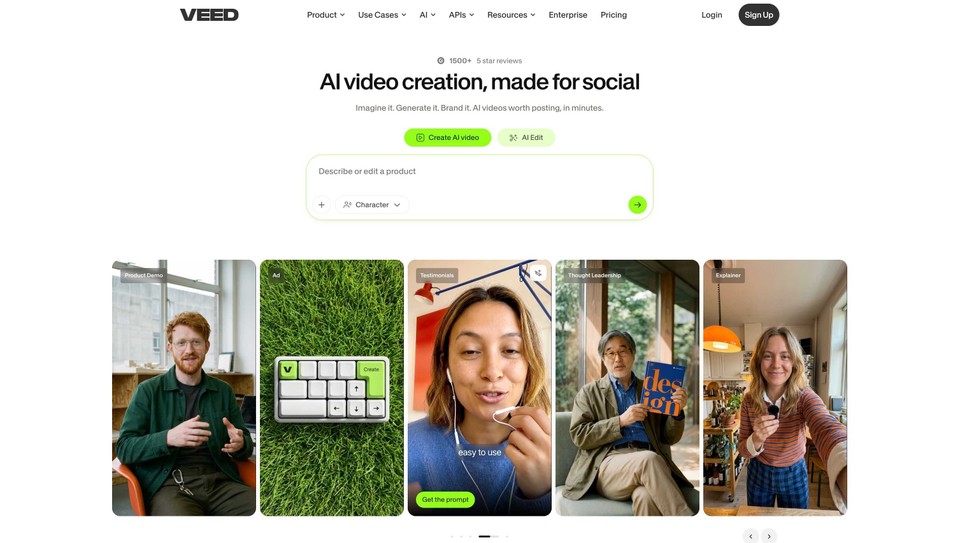
Veed is a full browser-based video editor that happens to include AI avatars. If your work involves editing real footage, adding captions, repurposing clips, and only occasionally dropping in an avatar, Veed gives you a proper timeline plus AI features at a reasonable price.
Pricing: Free plan (watermarked, 720p), Lite around $18 per month, Pro around $30 per month, Business around $70 per month. Flat subscription, no per-video credit metering.
Pros: Strong timeline editing, fast rendering, great captioning and repurposing tools, predictable pricing, large AI playground.
Cons: Its avatar library and realism lag the avatar-first tools, and the editor can feel busy if all you want is a talking head.
How it compares to HeyGen: These tools barely overlap. HeyGen is an avatar generator; Veed is an editor with avatars bolted on. If avatar quality is the priority, choose an avatar-first tool. If editing and repurposing matter more, choose Veed.
Best for: Social teams and editors who need editing plus light avatar use in one tool.
11. Tavus: the best alternative for developers building real-time video
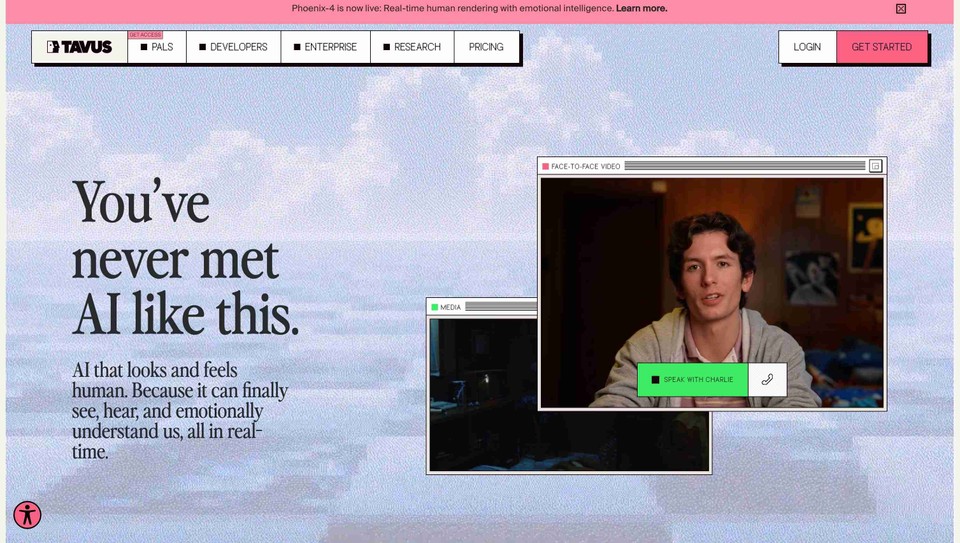
Tavus is in a different league of use case. It builds real-time, conversational digital humans through an API, so your product can hold a live, two-way video conversation with a user. This is the engine behind AI interviewers, interactive demos, and conversational agents, not a tool for making a marketing clip.
Pricing: Custom and usage-based, typically starting around $375 per month for growth tiers and scaling into the thousands for professional and enterprise real-time use, with per-conversation minimums.
Pros: Real-time interactivity, strong replica quality, robust developer API, genuinely novel capability.
Cons: Expensive and overkill unless you are building real-time experiences. Not a self-serve video creator for marketers.
How it compares to HeyGen: HeyGen renders finished videos; Tavus powers live conversations. If you are a developer who needs interactive video inside your own application, Tavus is the answer, and HeyGen simply does not compete there.
Best for: Developers and product teams building real-time conversational video into their apps.
How to choose the right HeyGen alternative
You do not need the "best" tool. You need the best fit. Here is the shortcut:
-
You want affordable all-in-one video, voiceover, and avatars: start with Fliki. Transparent pricing, huge voice library, and content-to-video workflows.
-
You run enterprise training or internal comms: Synthesia for polish and governance, Colossyan if LMS and SCORM are central.
-
You run paid social ads: Creatify, every time.
-
You are a solo or mobile creator: Captions for phone-first short form, Argil if you want to clone yourself.
-
You are on a tight budget or just learning: Vidnoz, or Fliki's free tier.
-
You need to animate a specific photo or build via API: D-ID.
-
You are a developer building real-time conversational video: Tavus.
-
You need a real editor with occasional avatars: Veed.
A simple rule that will save you money: if you produce video in unpredictable bursts or revise heavily, avoid credit-based pricing (HeyGen, Creatify, Captions, Vidnoz) and favor minute-based or flat plans (Fliki, Synthesia, Colossyan, Veed, Argil). The pricing model, not the avatar quality, is what usually decides whether you are happy in month three.
The best free HeyGen alternatives
If "free" is your real keyword, the honest ranking looks like this. Vidnoz offers the most lucrative free tier with daily generation and hundreds of avatars. Synthesia gives 10 watermarked minutes per month with high-quality avatars, which is great for evaluation. Fliki offers 5 free minutes per month plus access to its full voice library, ideal for testing voiceover-driven video. DeepBrain AI Studios and Veed both have functional free tiers with watermarks. Every free plan caps length and adds a watermark, so treat them as trials for real production rather than long-term solutions.
The bottom line
The flood of HeyGen alternatives in 2026 is good news: whatever made you start searching, whether it was credits running dry, a stuck render, or simply a mismatch between the tool and your work, there is a better fit out there. Be honest about your real pattern. How much video do you make, how often do you revise, what is your budget, and what does the finished video need to do?
If you want one platform that turns scripts, blog posts, and slides into polished videos with realistic voices in 80-plus languages, plus avatars, without the credit anxiety, give Fliki a try free. And if a different tool on this list fits your job better, use that one. The goal was never to sell you a logo. It was to help you ship better video faster, for less.
This guide was researched and written by the Fliki content team, which builds AI video and voiceover software and tracks the AI video category daily. Pricing and features were verified against vendor pricing pages and independent reviews in Q1 to Q2 2026. Because this category changes quickly, always confirm current pricing on each provider's site before purchasing.
FAQs
There is no single winner, because the right tool depends on your use case. For affordable all-in-one video and voiceover, Fliki is the strongest value. For enterprise avatars, Synthesia leads. For ads, Creatify wins. Match the tool to the job using the decision guide above.
Vidnoz has the most generous free tier for ongoing use, while Synthesia and Fliki offer the best free plans for evaluating quality. All free plans add watermarks and usage caps.
HeyGen itself starts at $29 per month, but its premium features run on a credit system. Advanced Avatar IV video consumes credits quickly, credits are capped each month, and re-renders cost credits again, so real costs can climb well above the headline price for high-volume users.
D-ID has the lowest paid entry point at around $5.99 per month, and Vidnoz starts around $14.99 with a strong free tier. Fliki's annual plans start near $21 per month with minute-based pricing.
Yes. Synthesia, and Colossyan sell minutes, while Veed and Argil use flat subscriptions. These are far easier to budget than credit-based plans.
Synthesia and DeepBrain AI Studios offer strong dubbing, and Fliki supports AI dubbing across 80-plus languages with voice cloning, which makes multilingual repurposing straightforward.