
Introduction
Let's skip the fluff.
You've seen the benchmarks. You've read the press releases. OpenAI launched GPT Image 2 in April 2026 and it immediately topped the Image Arena leaderboard. Google's Nano Banana 2 has been the speed-and-quality darling since February 2026. Both teams claim supremacy. Both have the screenshots to prove it.
But here's what the benchmark charts don't tell you: which model actually wins on the kind of work you do every day. A product label with multilingual text. A whiskey ad with caustic light. A wedding scene with eight people. An infographic that needs to look like it came from a magazine, not a school project.
So we designed six prompts built to find the cracks. Not soft prompts - deliberately demanding ones with competing constraints, complex lighting, precise text requirements, and cultural specificity. We ran them through both models on Fliki's AI Image Generator, which gives you side-by-side access to both Nano Banana 2 and GPT Image 2 without juggling multiple platforms. Here's everything we found.
What You're Actually Comparing
Before the results, a quick orientation - because these two models have fundamentally different DNA.
Nano Banana 2 (technically Gemini 3.1 Flash Image) is Google DeepMind's February 2026 release. Think of it as the model that refused to make a tradeoff. Previous Google image models forced you to choose between the high fidelity of Nano Banana Pro or the blistering speed of Flash. Nano Banana 2 does both - generating at 1K resolution in roughly 4 to 6 seconds while delivering image quality that punches up toward Pro-tier output. It supports up to 4K native output, accepts up to 14 reference images for style consistency, and is deeply integrated across Google's ecosystem including AI Studio, Vertex AI, and the Gemini app.
GPT Image 2 is OpenAI's April 2026 flagship, and its defining party trick is something no image model had done before: it reasons before it renders. Powered by O-series reasoning, it researches, plans, and self-checks the image structure before generating a single pixel. The result is near-perfect text accuracy, near-surgical instruction following for complex multi-element scenes, and up to 2K native resolution. Within hours of launch it set the largest Elo score gap in Image Arena history.
Both are available directly inside Fliki alongside models like Flux, Seedream, and Qwen - which is genuinely useful when you want to route different jobs to different engines from a single workspace. Now, the results.
Prompt 1: The Japanese Fisherman - Dual Light, Extreme Photorealism
The prompt:
"A weathered 60-year-old Japanese fisherman sitting inside his small wooden boat at 5:47am, mending a fishing net with calloused hands. Thick morning fog sits low on the water. A single lantern hanging from the bow casts warm amber light across one side of his face while cold blue dawn light hits the other side. His rubber overalls are wet and reflect the lantern. A thermos of tea sits on the wooden plank beside him. Shot on a Hasselblad X2D, 80mm lens, f/2.4, hyper-realistic, photojournalism style, Magnum Photos aesthetic."
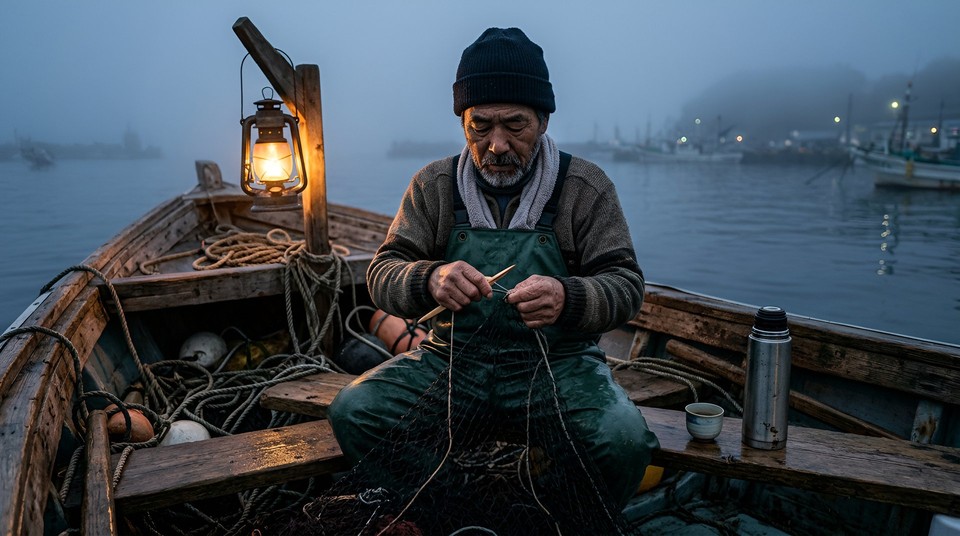
Nano Banana 2 Result
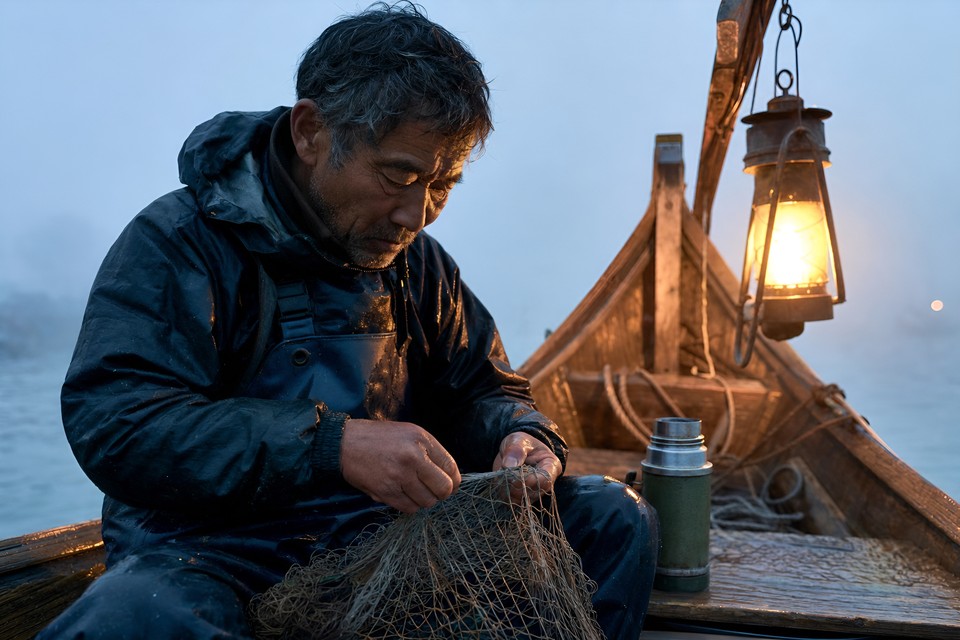
GPT Image 2 Result
The analysis:
Nano Banana 2 went wide. It chose a documentary composition showing the full boat, the fog-shrouded harbor behind, and the warm lantern casting a general amber glow over the scene. The thermos is there. The nets are there. The weathered face reads as authentic. It's a genuinely strong photojournalistic image.
But GPT Image 2 read the brief on a deeper level.
It understood that the soul of this prompt was the dual-light source fight on a single human face. The result is a tight portrait that looks like it actually came from a Magnum photographer's archive. Warm amber lantern light rakes across the fisherman's wet jacket from behind, creating amber specular highlights on the rubber surface. Cold blue dawn light sculpts his face from the front-left. The two temperatures fight each other on his skin exactly as they would at 5:47am on water. The net detail in his hands - fine mesh draped over calloused fingers - has genuine tactile weight to it.
Nano Banana 2 made a good photo. GPT Image 2 made the photo you described.
Winner: GPT Image 2 - for understanding that "dual light source on skin" was the core challenge, not just "man in boat."
Prompt 2: The AURÉA Label - Multilingual Typography in a Real Design Context
The prompt:
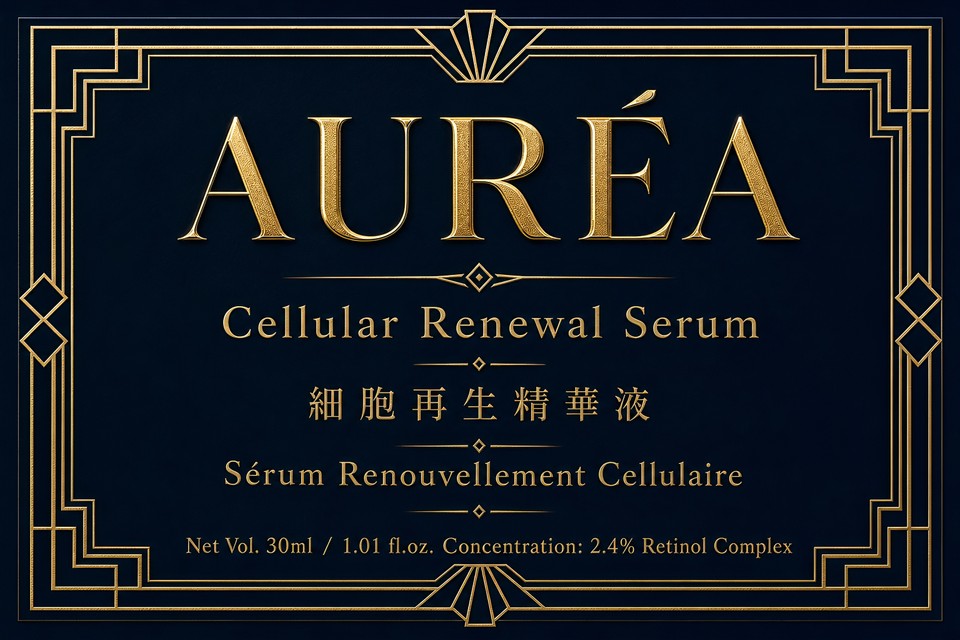
"A luxury skincare product label design for a serum bottle. The label must include the following text exactly as written: Brand name 'AURÉA' in large gold embossed serif font at the top. Below it: 'Cellular Renewal Serum' in English. Below that: '細胞再生精華液' in Traditional Chinese. Below that: 'Sérum Renouvellement Cellulaire' in French. Bottom of label: 'Net Vol. 30ml / 1.01 fl.oz. Concentration: 2.4% Retinol Complex'. Deep navy background, gold foil typography, Art Deco border, high-end pharmaceutical-meets-luxury branding aesthetic."
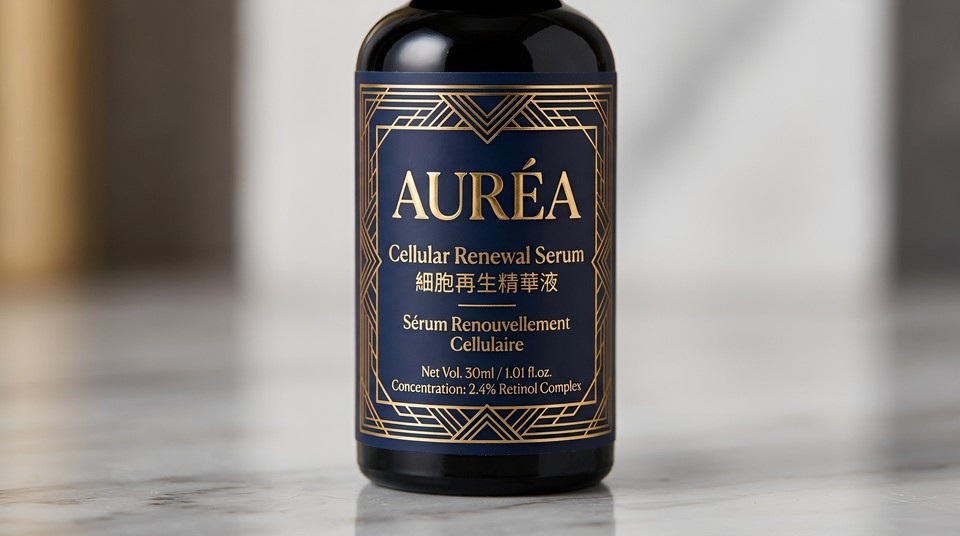
Nano Banana 2 Result
GPT Image 2 Result
The analysis:
This prompt was designed to stress-test three things simultaneously: text accuracy across scripts, typographic hierarchy, and design intent. It delivered two very different interpretations.
GPT Image 2 rendered a flat label graphic - the kind you'd hand to a packaging printer. Every single line of text is accurate. AURÉA with the correct accent. The Traditional Chinese characters 細胞再生精華液 are correctly formed and properly spaced. The French subtitle is flawless. The fine-print spec line at the bottom - "Net Vol. 30ml / 1.01 fl.oz. Concentration: 2.4% Retinol Complex" - is completely legible and accurate. The Art Deco gold border features fan motifs at top and bottom, diamond corners, and nested geometric frames. It's print-ready.
Nano Banana 2 made the braver creative call: it placed the label on an actual bottle, shot on marble with a soft-focus background. This is the image a marketing director actually wants - not the label isolated on white, but the product in its real-world context. The gold foil on the navy label catches ambient light. All the text is present and accurate, including the Chinese and French lines. The only minor imperfection: "Sérum Renouvellement Cellulaire" wraps to two lines rather than sitting on one, tightening the layout slightly.
This one genuinely depends on your use case. If you need a label file to hand to production, GPT Image 2 wins on precision. If you need a hero image for a campaign or a social media post, Nano Banana 2 produced something far more commercially beautiful.
Winner: Tie - GPT Image 2 for technical print accuracy, Nano Banana 2 for commercial creative output.
Prompt 3: Ember Ridge Whiskey - Caustics, Product Photography, and Label Text
The prompt:
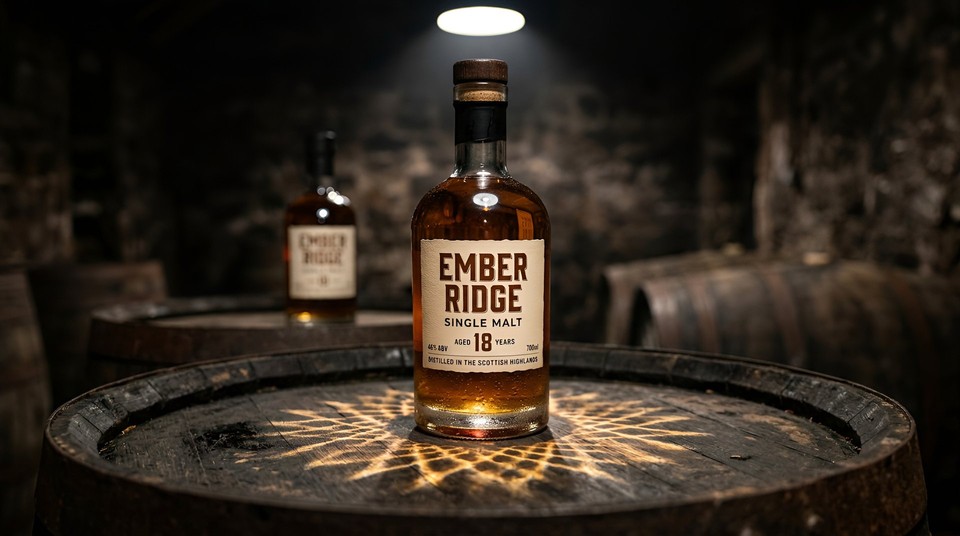
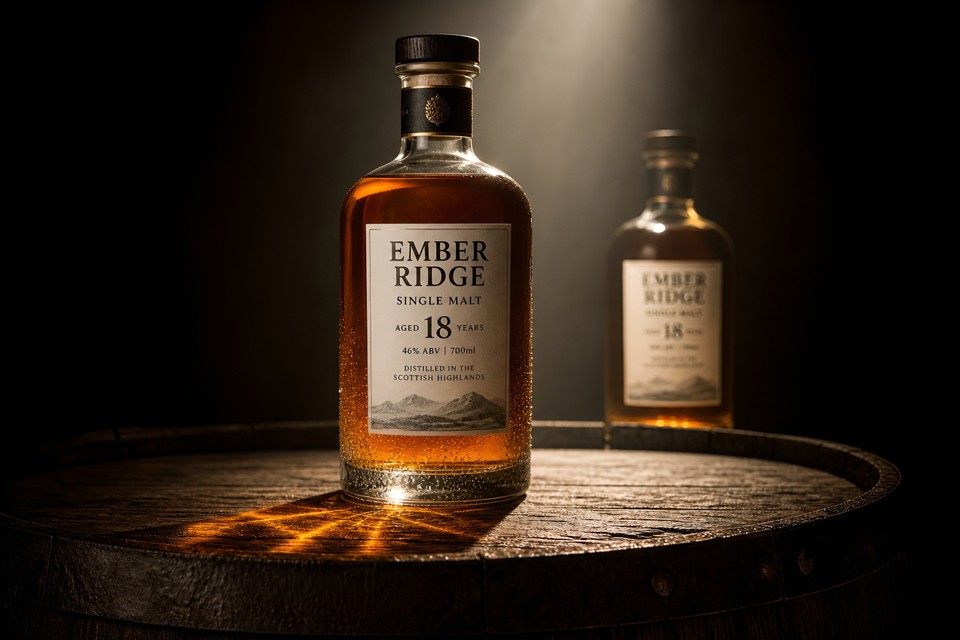
"A glass bottle of small-batch whiskey called 'EMBER RIDGE Single Malt, Aged 18 Years, 46% ABV, 700ml, Distilled in the Scottish Highlands' - the label must be fully readable. The bottle sits on a dark weathered oak barrel, with a single overhead spotlight creating a dramatic caustic refraction pattern through the glass and amber liquid onto the surface below. Condensation droplets on the lower half of the glass. A second bottle slightly out of focus in the background. Shot for a premium spirits advertising campaign. 4K commercial photography."
Nano Banana 2 Result
GPT Image 2 Result
The analysis:
When you ask an AI image model to render a glass bottle filled with amber liquid in a spotlight - you're asking it to solve one of the hardest problems in CGI: light passing through a curved transparent surface filled with colored liquid, refracting onto a solid surface. This is where the two models revealed very different strengths.
Nano Banana 2 chose atmosphere. The bottle sits inside what looks like a stone distillery cellar, an overhead spotlight cutting through darkness, and the caustic refraction pattern on the barrel top is present and genuinely impressive - a starburst light pattern that correctly simulates how light bends through curved glass. The label reads EMBER RIDGE / SINGLE MALT / AGED 18 YEARS / 46% ABV / 700ml / DISTILLED IN THE SCOTTISH HIGHLANDS - fully legible, accurate to the brief. Condensation beads on the lower glass. A second bottle sits in the shadowed background. This is a campaign image.
GPT Image 2 went for pure studio product photography. Black gradient background, a single dramatic light beam entering from the upper left and passing through the amber liquid, creating a golden illuminated halo effect. The label is clean and crisp with a subtle Highland mountain illustration that the model added on its own - a creative decision that actually elevates the label design. The glass and liquid refraction are more scientifically convincing: you can see light bending inside the liquid, creating bright-and-dark alternating zones that feel physically real. The second bottle in background also maintains a legible label.
Nano Banana 2 gave you the moody editorial. GPT Image 2 gave you the ad you'd run in a whiskey magazine.
Winner: GPT Image 2 - the liquid light physics and studio composition feel more production-ready, though Nano Banana 2's cellar atmosphere has genuine creative value.
Prompt 4: The Brutalist Library Club - Architectural Complexity
The prompt:
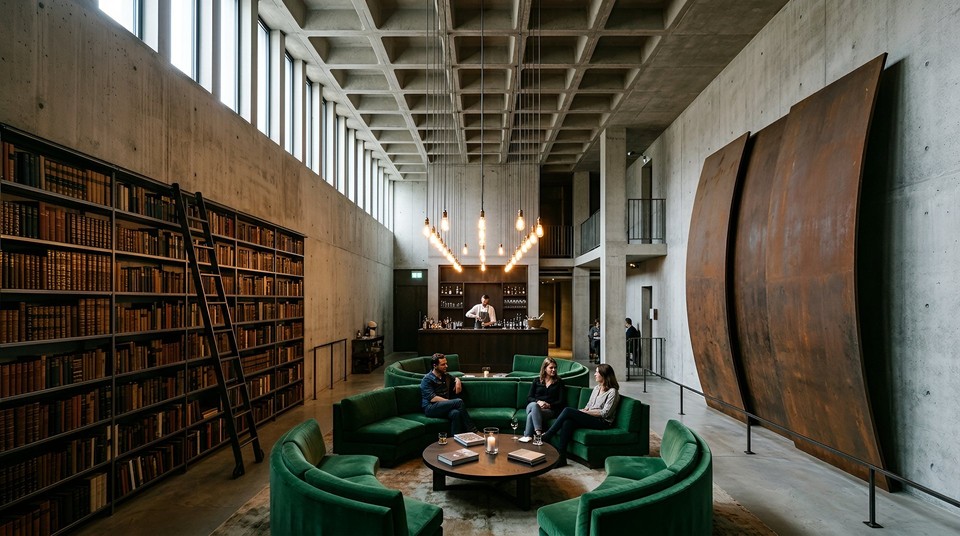
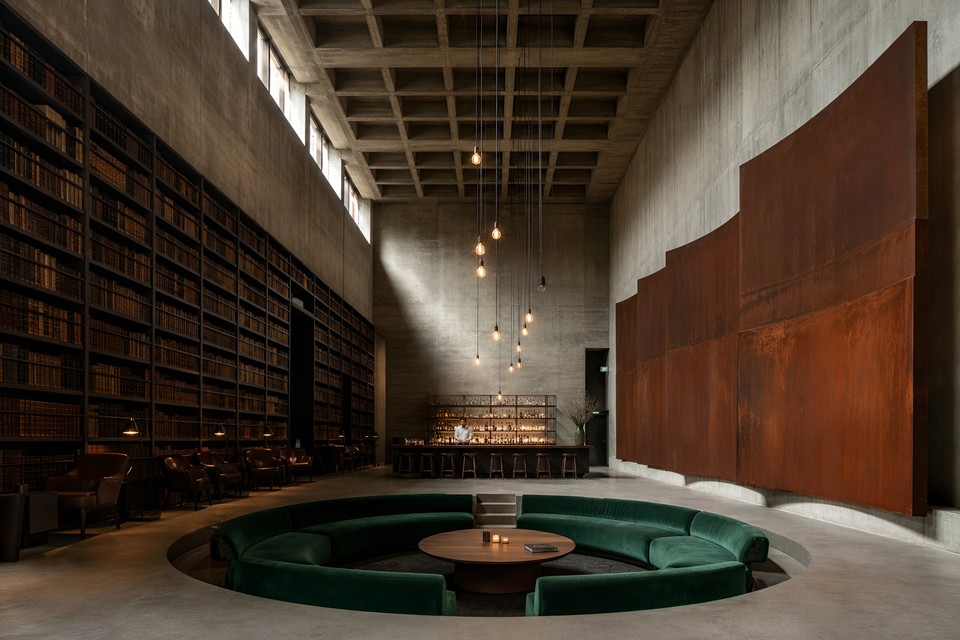
"The interior of a brutalist converted library turned private members club in East London. 12-meter-high raw concrete walls with original brutalist coffered ceiling. Floor-to-ceiling bookshelves on the left wall filled with leather-bound books. On the right wall: a massive 8-meter-wide Richard Serra-style rusted Cor-Ten steel installation. In the center: a sunken lounge pit with curved emerald green velvet sofas arranged in a circle around a circular oak coffee table. A bartender in a white linen shirt makes a cocktail at the far end. Warm Edison bulb pendants contrast with cold natural light pouring in from narrow clerestory windows high on the left wall. Architectural photography by Iwan Baan."
Nano Banana 2 Result
GPT Image 2 Result
The analysis:
This prompt was an all-out instruction-following stress test. Six distinct architectural and interior elements, two competing light sources, specific material descriptions, a named photographer's style, and a scale requirement. Most models would produce something that looks vaguely right but quietly drops two or three elements.
Nano Banana 2 produced a beautiful, warm, and inviting space. Every element is present: the coffered concrete ceiling, the floor-to-ceiling bookshelves with a rolling library ladder, the Cor-Ten steel installation on the right wall, the green velvet circular sofas, the bartender at the back, Edison pendants, and clerestory windows. The warmth of the Edison light fills the room. It looks like a real place you'd pay a membership fee to visit.
GPT Image 2 produced the same space but made a critical architectural decision Nano Banana 2 missed: the lounge pit is actually sunken into the floor, as specified. That detail - a circular depression in the concrete floor with the sofas sitting below ground level - is architecturally precise to the brief and it completely changes the spatial drama of the image. The Cor-Ten steel on the right wall has more convincing surface texture, with the characteristic bloom patterns of weathered weathering steel. The contrast between the single cluster of warm Edison bulbs against vast grey concrete and the cold light from the narrow clerestory windows is more dramatic. The mood is more Iwan Baan - that sense of architecture as a setting for human smallness.
Winner: GPT Image 2 - by one precise, important detail: the sunken lounge pit. When a model reads a 150-word brief and remembers a specific spatial instruction that most humans would have skimmed past, that's the reasoning architecture doing its job.
Prompt 5: South Indian Wedding - 8-Person Crowd Scene
The prompt:
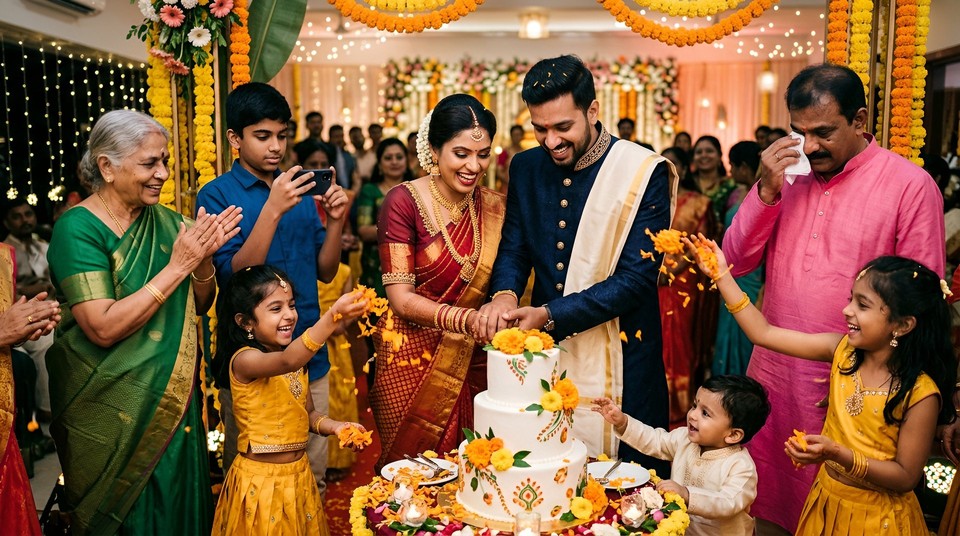
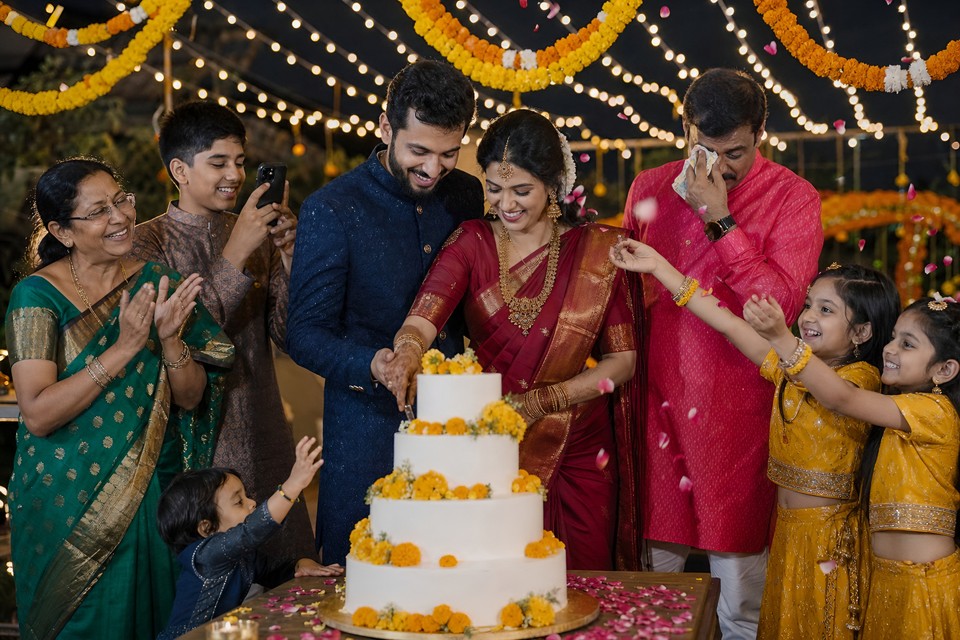
"A chaotic but joyful South Indian wedding reception scene at the exact moment the cake is being cut. The bride wears a deep red silk Kanjivaram saree with gold zari border, the groom is in a cream silk dhoti and navy sherwani. Six family members crowd around them: a grandmother in a green saree clapping, a teenage boy filming on his phone, an uncle in a bright pink kurta dabbing his eye with a handkerchief, two young girls in matching yellow lehenga throwing flower petals, and a toddler reaching for the cake from the front. The cake is 4 tiers, white fondant with fresh marigold decorations. String lights and marigold garlands hang overhead. Shot on a Canon R5 with natural and warm ambient light, documentary wedding photography style."
Nano Banana 2 Result
GPT Image 2 Result
The analysis:
Eight characters, specific costumes for each, a precise emotional state for at least three of them, cultural garment accuracy, a specific cake, and a documentary photography mandate. This is the kind of prompt where AI image models usually either drop characters, blend costumes incorrectly, or produce something that looks more like a render than a photograph.
Nano Banana 2 gave an indoor scene packed with warmth and color. The Kanjivaram saree is vivid and accurate, the garlands and string lights overhead are festive, the grandmother in green is present and clapping, the uncle in pink is dabbing his eye with a tissue, the girls in yellow are throwing petals, the teenage boy is filming - it hit nearly every character note. The cake is white fondant with marigold decorations. The issue is that the overall image leans slightly illustrative rather than documentary - the faces are beautiful but slightly too perfect, and the composition feels more like a magazine illustration than a real wedding.
GPT Image 2 moved the setting outdoors under a marquee, which technically deviated from the brief. But the photographic quality is the conversation here. Flower petals caught mid-air with a fast shutter. The bokeh on the fairy lights overhead. The couple's expressions at the exact moment of the cut - genuine, unposed-feeling joy. The emotional uncle in pink is actually holding a handkerchief to his face. The girls in yellow at the right edge. The toddler in blue reaching for the cake at the front. The marigold-decorated cake tiers. This image looks like it came from an actual wedding photographer's portfolio.
The outdoor deviation is real. But the photographic authenticity - the way GPT Image 2 captures the specific emotional texture of that moment - is something Nano Banana 2 didn't quite reach.
Winner: GPT Image 2 - for photographic authenticity and emotional realism, with a note that Nano Banana 2 followed the indoor setting instruction more faithfully.
Prompt 6: Editorial Infographic - Exact Data, Typography, Layout Hierarchy
The prompt:
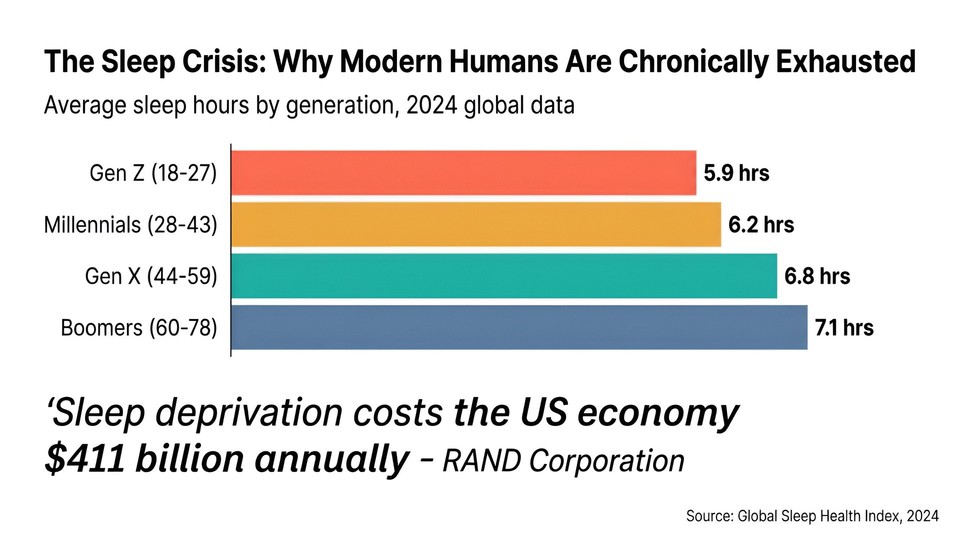
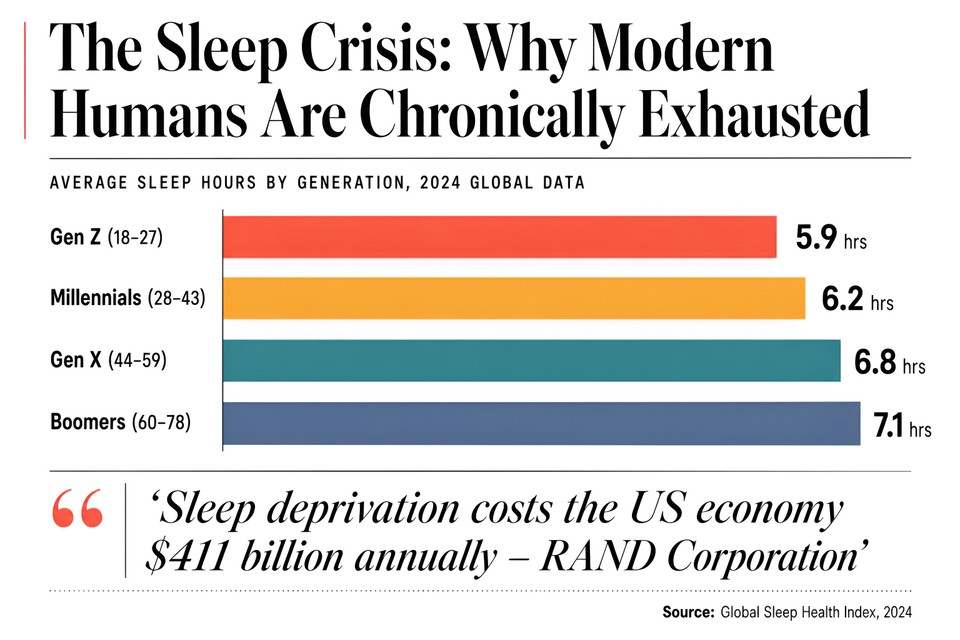
"A beautifully designed magazine-editorial-style data visualization for a feature article. Title text at top: 'The Sleep Crisis: Why Modern Humans Are Chronically Exhausted'. Subtitle: 'Average sleep hours by generation, 2024 global data'. Show a horizontal bar chart with exactly these values: Gen Z (18-27): 5.9 hrs, Millennials (28-43): 6.2 hrs, Gen X (44-59): 6.8 hrs, Boomers (60-78): 7.1 hrs. Color each bar differently: Gen Z = coral red, Millennials = amber, Gen X = teal, Boomers = slate blue. Below the chart, include a pull quote in large italic font: 'Sleep deprivation costs the US economy $411 billion annually - RAND Corporation'. Bottom right: source credit 'Source: Global Sleep Health Index, 2024'. Clean editorial design, white background, The Economist meets Wired visual style."
Nano Banana 2 Result
GPT Image 2 Result
The analysis:
This prompt was almost designed to expose which model thinks like a designer and which one just executes instructions. The data is not hard - four bars with specific values. The real test is whether the model understands typographic hierarchy, editorial visual language, and the difference between a functional chart and a designed one.
Both models got every data point correct. All four values (5.9, 6.2, 6.8, 7.1 hrs), all four generation labels with correct age brackets, correct colors (coral red, amber, teal, slate blue), the exact pull quote, and the correct source attribution. Both cleared that bar.
But look at them side by side.
Nano Banana 2 produced a clean, functional infographic. Clear title, correct chart, pull quote with selective bold formatting. It works. It's professional. You could drop this into a blog post and it would do the job.
GPT Image 2 produced something that looks like it was actually designed by someone who reads The Economist. The thin red editorial accent line running vertically down the left edge. The ALL CAPS small-caps subtitle treatment with generous letter-spacing. The typographic contrast between the bold generation labels and the lighter hour values. The formal quotation mark design element framing the pull quote. The dotted rule separating sections. These are the details that separate "generated chart" from "editorial asset." The hierarchy does visual work - your eye flows from headline to subtitle to data to pull quote to source attribution in exactly the right order.
Winner: GPT Image 2 - and it's not close. The typographic intelligence here is on another level.
The Overall Scorecard
Prompt | Test | Winner |
|---|---|---|
Japanese Fisherman | Dual-light photorealism | GPT Image 2 |
AURÉA Label | Multilingual typography | Tie |
Ember Ridge Whiskey | Product photography + caustics | GPT Image 2 |
Brutalist Interior | Architectural instruction following | GPT Image 2 |
South Indian Wedding | Multi-person scene realism | GPT Image 2 |
Sleep Infographic | Editorial data visualization | GPT Image 2 |
GPT Image 2: 5 wins (+ 1 tie). Nano Banana 2: 1 tie.
That scoreline is real, but it needs context. Because what Nano Banana 2 demonstrated across these tests matters just as much as the wins it didn't take.
What This Actually Means for Your Workflow
Choose GPT Image 2 when:
You need text inside images to be exactly right. The AURÉA label, the Ember Ridge whiskey, the sleep infographic - GPT Image 2 rendered every character correctly, including Traditional Chinese characters with proper stroke structure and French diacritics. For product labels, posters, editorial graphics, and any asset where text is structural rather than decorative, this is the model. OpenAI's own benchmark claims 99% typography accuracy, and these tests back it up.
You're briefing complex multi-element scenes. The brutalist library remembered the sunken pit. The fisherman got dual-source lighting right. When your prompt has six or more specific constraints, GPT Image 2's reasoning layer does meaningful work - it plans the image before it generates it, and that planning shows up in the output as details that feel intentional rather than coincidental.
You're producing editorial or design work. The infographic result said it all. GPT Image 2 thinks typographically. If your output will be compared against professional design work, it has a clear advantage in hierarchy and visual intelligence.
Choose Nano Banana 2 when:
You need volume at speed. Nano Banana 2 generates at roughly 4 to 6 seconds at 1K resolution. For content teams producing dozens of images weekly - social posts, blog headers, video thumbnails - that speed advantage at pricing from $0.067 per 1K image compounds significantly over time. When you're running Fliki's video workflows and need images generated at scale inside a production pipeline, the speed-to-quality ratio is outstanding.
The image needs to feel photographed. Look again at the AURÉA bottle shot. Nano Banana 2 didn't just render a label - it shot the product. The marble surface, the ambient bokeh, the gold foil light catch. For lifestyle photography, social campaigns, and brand content where the image needs to feel like it was captured rather than generated, Nano Banana 2 consistently reaches for the camera-shot aesthetic. It understands the emotional difference between a product in context versus a product in isolation.
You work inside Google's ecosystem. Nano Banana 2 is natively integrated into AI Studio, Vertex AI, Google Search, and the Gemini app. If your infrastructure is already Google-cloud, the workflow friction disappears.
You want predictable per-image pricing. Nano Banana 2's pricing is straightforward: $0.067/image at 1K, $0.101 at 2K, $0.151 at 4K. GPT Image 2 uses token-based billing, which gives you more optimization levers but requires more budget modeling. For teams that want to forecast costs simply, Nano Banana 2 is cleaner.
The Honest Summary
GPT Image 2 is the technically superior model in 2026, particularly for anything involving text, complex instructions, or design-level output. Its reasoning architecture is a genuine breakthrough - not a marketing claim. When a model can remember that a "lounge pit" should be sunken into the floor, or that "dual light source on skin" means split-face lighting rather than general ambient warmth, you're seeing something that's qualitatively different from previous image AI.
Nano Banana 2 is not a consolation prize. It's a fast, beautiful, commercially capable model that consistently produces images you'd want to use rather than fix. Its instinct for photographic context - for placing products in spaces, for choosing the atmospheric wide shot over the tight portrait - gives it a creative voice that GPT Image 2 sometimes sacrifices in favor of precision.
The real answer to "which one should I use" is: both, routed correctly. Tools like Fliki's AI Image Generator support both models side by side, which means you don't have to commit to one. Use GPT Image 2 for your infographics, labels, posters, and instruction-heavy scenes. Use Nano Banana 2 for your lifestyle shots, social content, and high-volume production runs. The model you need changes by asset type, and the best workflow is one that treats that routing decision as a feature, not a limitation.
Both models are extraordinary by any previous standard. Six months ago, the AURÉA label with accurate Traditional Chinese across three scripts would have been genuinely impossible to generate reliably. That it's now a question of "which version of near-perfect" tells you something important about where image AI is in mid-2026.
Try Them Yourself
The best way to form your own verdict is to run your actual prompts, not our test prompts, through both models. Fliki's image generator gives you access to GPT Image 2, Nano Banana 2, and ten other leading models in a single interface - no separate API keys, no platform switching, and with Fliki's video workflow your generated images plug directly into voiceover, captions, and timeline editing.
Run the prompts you care about. The model that wins your benchmark is the one worth using.
Both models were tested in June 2026. Pricing figures are based on published API rates at time of testing and may change.